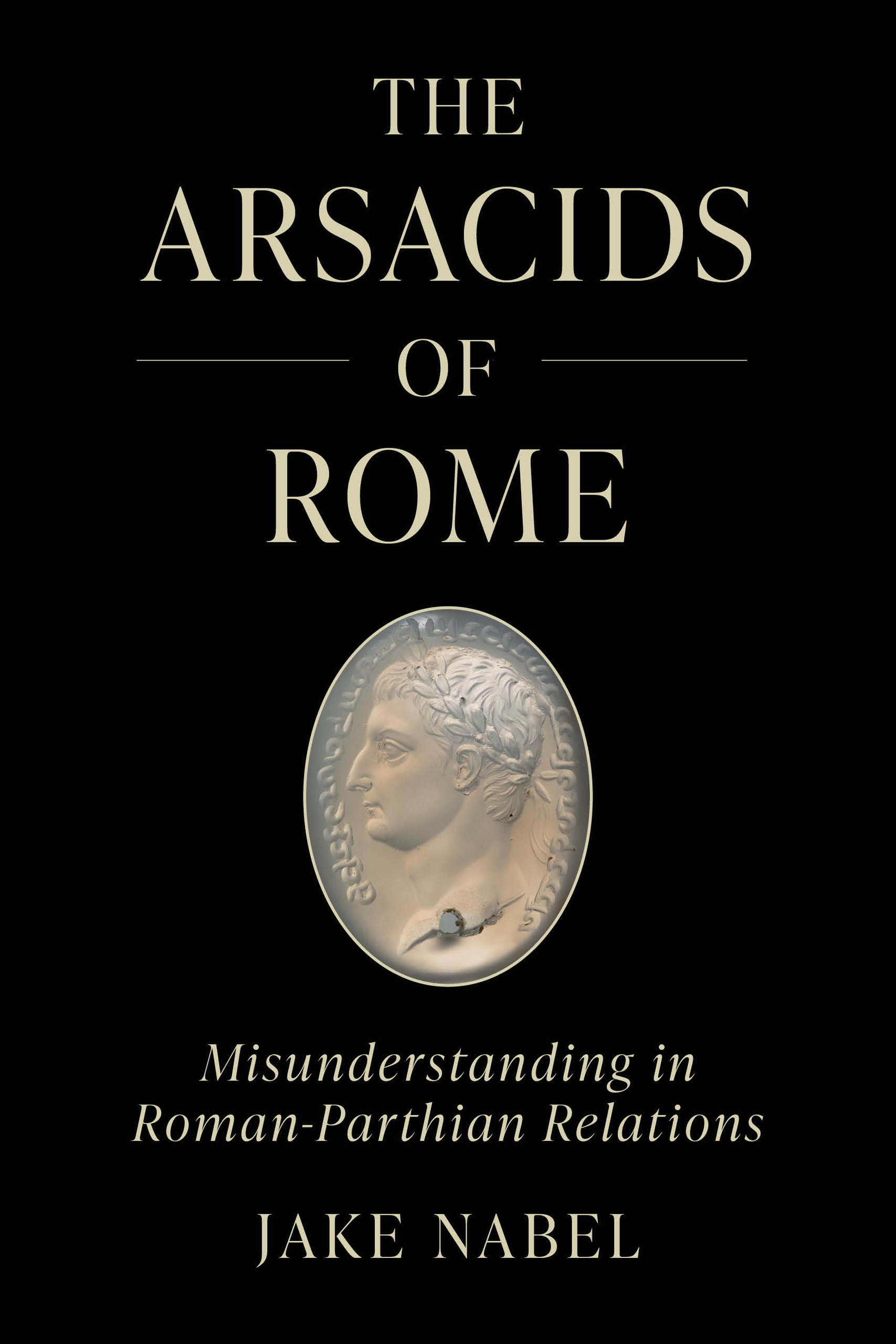
2025. The Arsacids of Rome: Misunderstanding in Roman-Parthian Relations. Iran and the Ancient World 2. Oakland: University of California Press.
At the beginning of the common era, the two major imperial powers of the ancient Mediterranean and Near East were Rome and Parthia. In this book, Jake Nabel analyzes Roman-Parthian interstate politics by focusing on a group of princes from the Arsacid family—the ruling dynasty of Parthia—who were sent to live at the Roman court. Although Roman authors called these figures “hostages” and scholars have studied them as such, Nabel draws on Iranian and Armenian sources to argue that the Parthians would have seen them as the emperor’s foster-children. These divergent perspectives allowed each empire to perceive itself as superior to the other, since the two sides interpreted the exchange of royal children through conflicting cultural frameworks. Moving beyond the paradigm of great powers in conflict, The Arsacids of Rome advances a new vision of interstate relations with misunderstanding at its center.
The digital version of the book is available open access through Luminos, University of California Press’s Open Access publishing program. Click the image below to download.

The Arsacids of Rome appears in the UCP series “Iran and the Ancient World,” edited by M. Rahim Shayegan of UCLA. From the UCP description:
“Iran and the Ancient World supports original studies in the history, literary traditions, material culture, and religions of ancient Iran, while seeking to relate these to the broader historiographic mainstream of the ancient worlds. The series aims to foreground the interconnection of the Iranian world with other, contiguous cultural expanses, fostering comparative and interdisciplinary perspectives on questions of broad import to the humanities and social sciences.
Through participation in the University of California Press’ Luminos program, the series shall facilitate open access to its publications, in order to engage an interested, global audience, as well as broadly raise awareness of the contribution of the Iranian element to the ancient worlds.”
You can find other open access titles in the series on its UCP home page.
